


It doesn't really make sense to trot out the "GA makes money" report every time there's a story about spending at a local airport. It's the typical stuff we get from trade groups when reporting on a particular airport. The question is: Does Palmyra make money for the local economy and if so, how much does it make?
If you can't answer THAT question, then, no, you don't belong in the WTMJ report, which I acknowledge was pretty superficial. Specifically, what was the money at the "small airports" used for? And why was it needed?
It's quite possible, actually, that it wasn't needed at all. The lack of any explanation in the report is a real black mark against the piece.
That said, and as someone who has worked as a journalist for almost 40 years, I've always hated the way AOPA portrays the media in its "us against them" mentality. A lot of people who fly ARE in the media and the media actually does some really good stories about general aviation. But AOPA poisons the relationship as much as some media organizations do and that has to change someday soon.
Your call to flood the TV station with complaints is just stupid and ignores a key component of the piece: THE COMPLAINANT IS A PILOT AT THE AIRPORT!!! He runs the flying club there. He restores planes with the kids. He knows what's going on at his airport.
That carries a lot of weight in my book; more weight than someone sitting in a cubicle in Maryland carries, and yet AOPA responds the way it usually does -- by playing victim at the hands of the media.
Maybe Steve Sorge knows what he's talking about. Maybe he knows more than the people you sent your e-mail call-to-arms too. Maybe, at least this one time and this one airport, he's right.
Second, we all know that one of the tactics we supporters of airports use is to try to get federal funds spent on them, not because they really need the upgrade, but because the federal funds are the golden handcuffs on local officials that keep them from closing the airport.
As much as GA brings in to the economy at many airports -- my home field of KSGS is a great example -- maybe -- just maybe -- 88C is a waste of money.


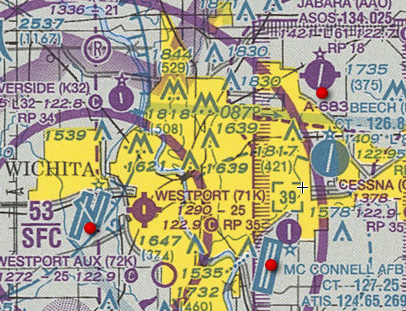
A Dreamlifter is supposed to need a runway 9,199 feet long to take off at maximum takeoff weight, and 7,000 feet to land at maximum landing weight. The runway at Jabara is 6,101 feet long.
Planes are built to fly; they don't know they're in the wrong spot.
2012 RV-7A, 100 TT, IO-360M1B, FP, VFR, Polished. Fiberglass unpainted but ready. D100. EIS4000, VP-50, $83,900. bcollinsrv7a@comcast.net 1712730
"I have a budget of $75,000. Your plane looks very nice but needs paint and cs prop. Let's discuss."
"I can't help you. You probably need to be looking for a $75,000 plane with paint and cs prop."

Going to Oshkosh was a lot of fun; I sat in Johnny Depp's seat on the Tri-motor, got to fly in the one of a kind B-29, saw George Lucas with the Tuskeegee Airmen, and got see so many great Airplanes. The coolest part of the trip was the B-29 ride, because it had such a great view from the gunners position on the top and in the back, and you could feel the history of such an aircraft. It was the type of plane that is terrifying and peacemaking at the same time.
You all made this trip so Amazing and you will forever be in my heart.
On September 25, 2013, about 1715 central daylight time, a Cirrus SR20 airplane, N406DC, impacted terrain after executing a go-around near Bolingbrook’s Clow International Airport, (1C5), Bolingbrook, Illinois. The pilot and one passenger were fatally injured. The airplane was destroyed. The airplane was registered to GDK International LLC and operated by a private individual under the provisions of 14 Code of Federal Regulations Part 91 as a personal flight. Visual meteorological conditions prevailed for the flight, which operated without a flight plan. The flight originated from Georgetown Scott County Airport (27K), Georgetown, Kentucky about 1500 and was destined for 1C5.
The airplane was captured on 1C5 airport surveillance cameras while attempting to land. A review of the video showed that the airplane touched down multiple times about half way down the runway. The airplane was observed making a left turn after takeoff, descending, and then proceeding out of camera view.
Witnesses reported seeing the airplane depart the runway and make a left turn at a low altitude. The airplane continued to descend, struck a tree and a light pole before impacting a parking lot and sidewalk. A post impact fire ensued and consumed most of the airplane.
The automated weather reporting station at Lewis University Airport which was 5 miles south of the accident site reported at 1715: wind from 070 degrees at 8 knots, 10 miles visibility, clear sky, temperature 21 degrees Celsius (C), dew point 9 degrees C, and a barometric pressure 29.94 inches of mercury.
During the on-scene examination investigators confirmed flight control continuity and that the flaps were in the retracted position. The Cirrus Airframe Parachute System (CAPS) rocket and parachute were found in the main wreckage. The position of the CAPS activation handle could not be verified due to thermal damage. The parachute was found in a packed state and received thermal damage. The CAPS activation cable was examined and no stretching was found.
WIGY TV - Falling or Flying from Pitts Artist on Vimeo.

